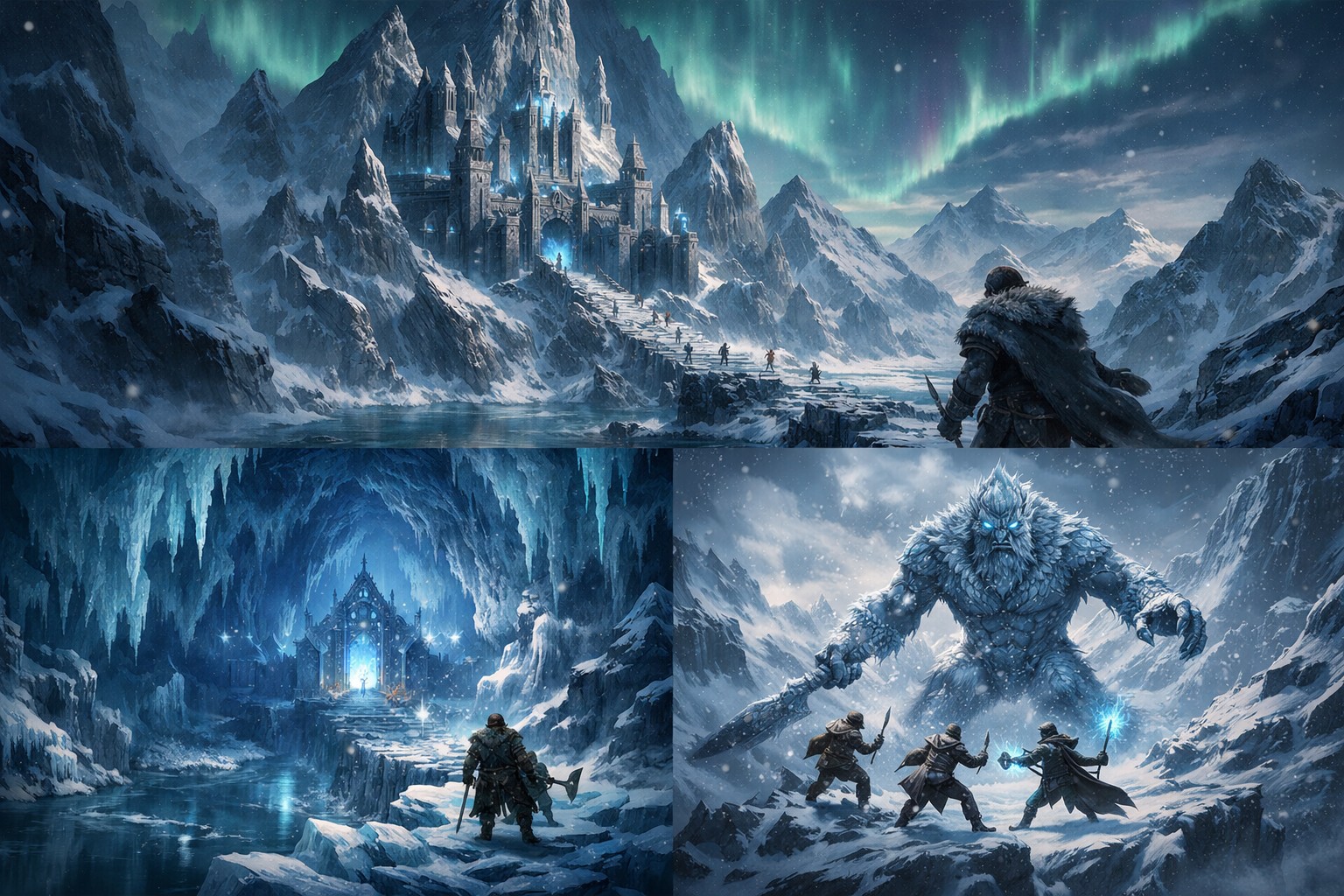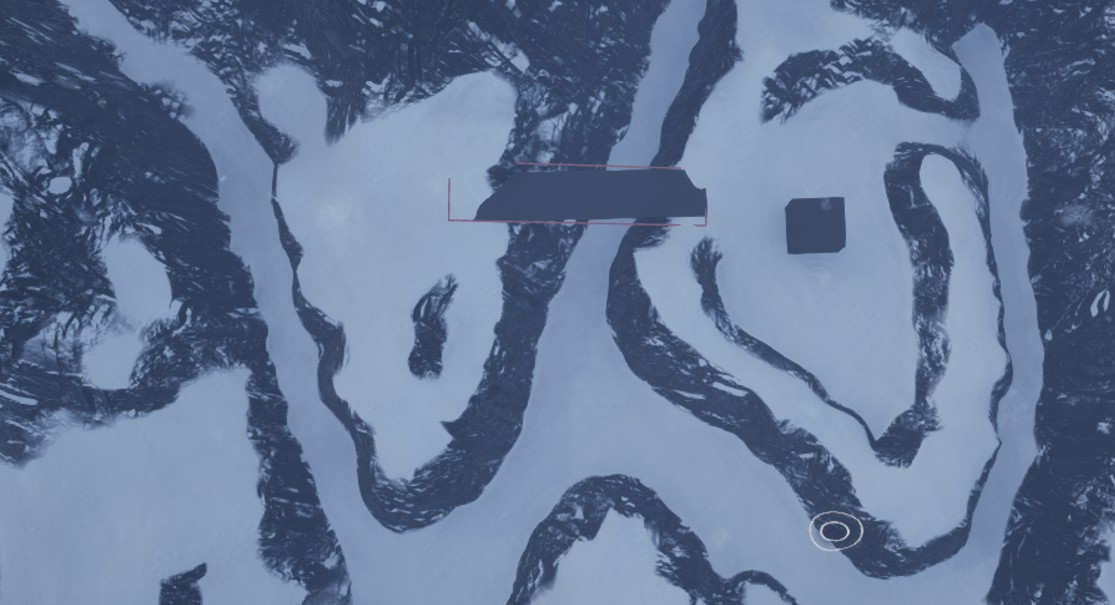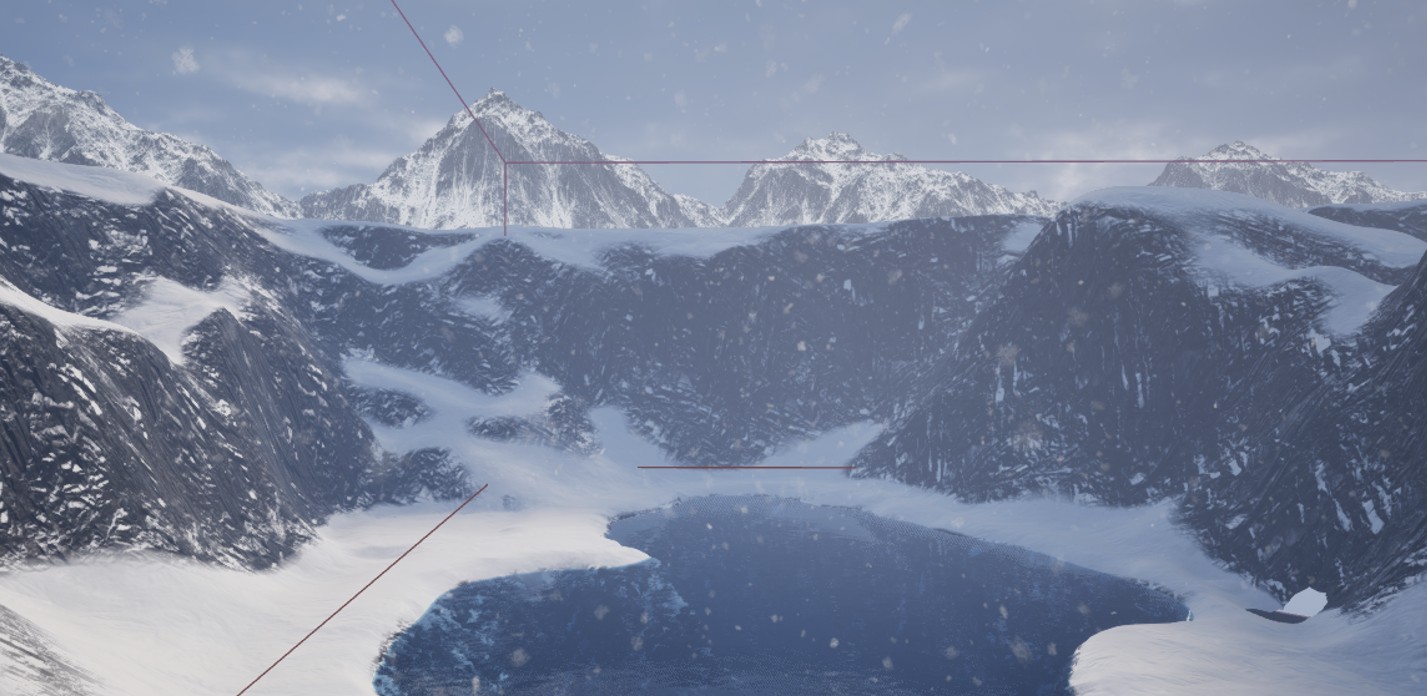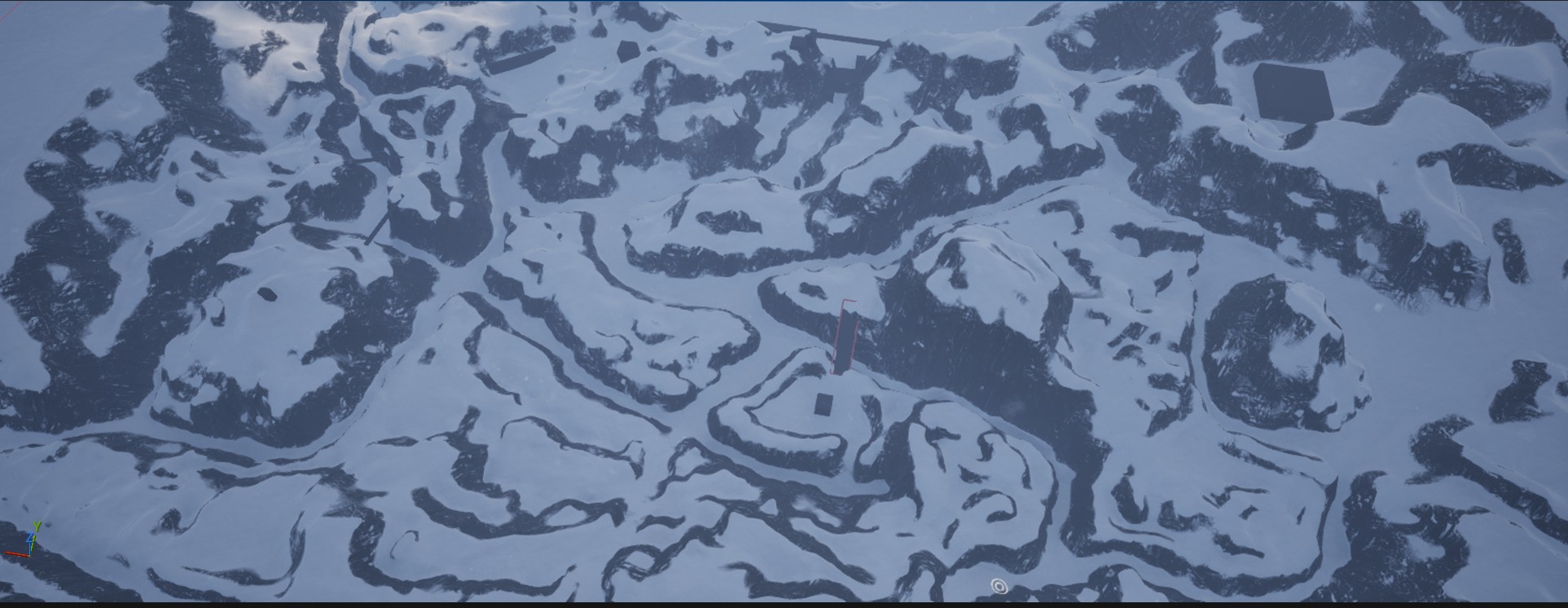
Hey everyone! Just wanted to let you know that the team is finishing up the blocking of the map we'll be using for our vertical slice. This is an exciting milestone—probably more exciting than a top-down image of snowy terrain might suggest!—because it represents the foundation of what will become a fully playable demo section of Zephara.
For those unfamiliar with game development, a "vertical slice" is a small but complete portion of a game that showcases all core systems working together. It's not about quantity—it's about quality and proving that the vision is achievable. Our vertical slice will be the first time everything comes together: exploration, combat, quests, NPCs, and world-building, all functioning as intended.
What is Map Blocking?
Map blocking is where we lay out the terrain, establish the flow of the environment, and make sure the space works for gameplay before we start adding all the beautiful details. It's like creating the skeleton that everything else will be built upon—and just like a skeleton, getting it wrong means everything built on top will have problems.
At this stage, we're not worried about whether a specific rock looks good. We're worried about whether the player will naturally see the path we want them to see. Whether enemies have interesting positions to defend. Whether sight lines create tension or reveal beauty at the right moments. Whether the space feels too cramped or too empty. Whether travel times feel appropriate or tedious.
Getting this right is crucial—it determines how combat encounters flow, where players naturally explore, how the story unfolds, and whether the moment-to-moment experience feels right. Many games fail not because their assets aren't pretty, but because their level design doesn't support the experience they're trying to create.
"You can have the most beautiful art in the world, but if the level design doesn't flow, players won't enjoy the experience. That's why we spend so much time on blocking before we add a single texture. We've learned from watching playtests of our early versions that layout problems can't be fixed by making things prettier—they have to be fixed by redesigning the space."
What's in the Vertical Slice?
The vertical slice will include everything a player needs to understand what Zephara is and decide if they want more. It's our pitch, our proof of concept, and our foundation—all in one small but complete package:
- Millhaven Village: Your starting hub with shops, quest-givers, and colorful NPCs. Each character has a story, a personality, and relationships with others. This isn't a village of quest dispensers—it's a community you'll want to protect. We're aiming for about a dozen distinct NPCs with meaningful dialogue and routines.
- The Frozen Wastes: Wilderness areas with roaming enemies, hidden secrets, and environmental storytelling. Exploration is rewarded with resources, lore discoveries, and optional encounters. The Wastes also demonstrate our weather and time-of-day systems, showing how the same area feels different under different conditions.
- Iceclaw Caverns: A dungeon with puzzles, traps, environmental hazards, and a challenging boss encounter. This is where we showcase our tactical combat system, demonstrating how terrain matters and how different approaches can handle the same challenges. The boss fight introduces mechanics that require understanding, not just damage output.
- Side Quests: Optional adventures that flesh out the world's lore and demonstrate that Zephara isn't just a main story railroad. These side quests have multiple solutions and consequences that ripple through the world. They're not "collect 10 wolf pelts" affairs—they're actual stories worth experiencing.
In total, the vertical slice represents about 2-3 hours of gameplay content if you explore thoroughly and engage with the optional material—or about an hour if you focus purely on the main path. We want players to feel that either approach is valid.
Finding the Right Balance
We've been playtesting internally to ensure the pacing feels right—and this has required more iteration than you might expect. Too much empty space between encounters makes exploration tedious, making players feel like they're just walking between content. Too little makes the world feel cramped and arcade-like, with threats seemingly spawning wherever the player goes.
Finding that balance is one of the most challenging aspects of open-world design. We're looking for what we call "positive uncertainty"—the player should feel like anything could happen, that exploration might reveal danger or reward, but not feel like danger is inevitable. Tension, not anxiety. Anticipation, not dread.
We've also been balancing density of points of interest. Every location should feel intentional, but there shouldn't be something every ten feet demanding attention. Open-world games often fail because they cram in so much content that exploration becomes exhausting rather than exciting. We want exploration to feel like discovery, not like checking boxes.
What Comes Next
Once blocking is complete, we move to what's called "art pass"—adding the actual visual content that will make this space beautiful. But even during art pass, we continue testing and iterating on the layout. Level design is never truly "done" until the game ships.
After that comes systems integration—making sure all our gameplay systems work correctly in this space. Combat, dialogue, inventory, quest tracking, saving, loading, weather, time of day—all of it has to work together without breaking. This phase always reveals problems we didn't anticipate, and solving them makes the final experience better.
Thank You!
We hope to have more updates for you soon! Thank you to everyone who's been keeping tabs on the project. Your support means the world to us—quite literally, since community interest is what makes continued development possible.
Game development is a marathon, not a sprint, and there are many miles to go before we sleep. But milestones like this—a complete map block, the skeleton of our vertical slice—remind us how far we've come and make the destination feel achievable.
Stay tuned for more development updates as we bring the vertical slice to life. And if you haven't already, join our Discord to follow the journey in real-time!