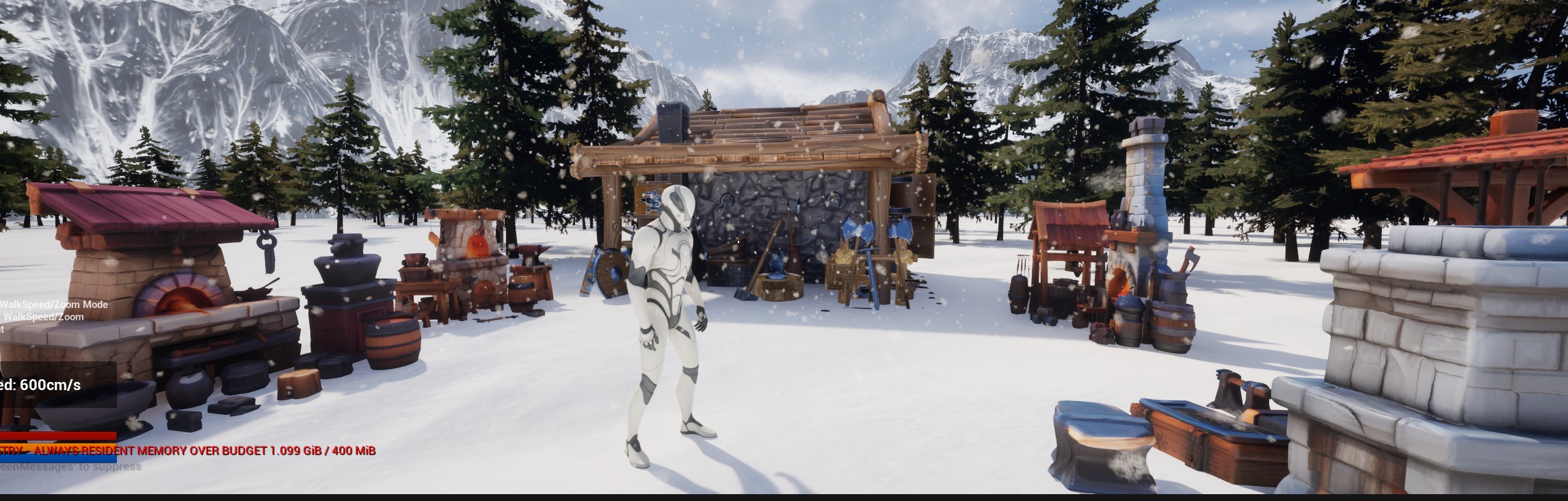
Today we're sharing a glimpse of the art style direction we're exploring for Zephara. This scene shows a village crafting area with all the elements that make a settlement feel alive and functional—but more importantly, it represents our philosophy about what makes a game world feel like home.
Every detail has been carefully considered. You can see the blacksmith area complete with forge and anvil, the warm glow of embers reflecting off worn metal tools. Sturdy wooden barrels line the workspace, filled with supplies that took someone time to gather. The rustic structures show the marks of their builders—hand-hewn beams, slightly imperfect joints, the kind of construction that speaks of real people doing real work.
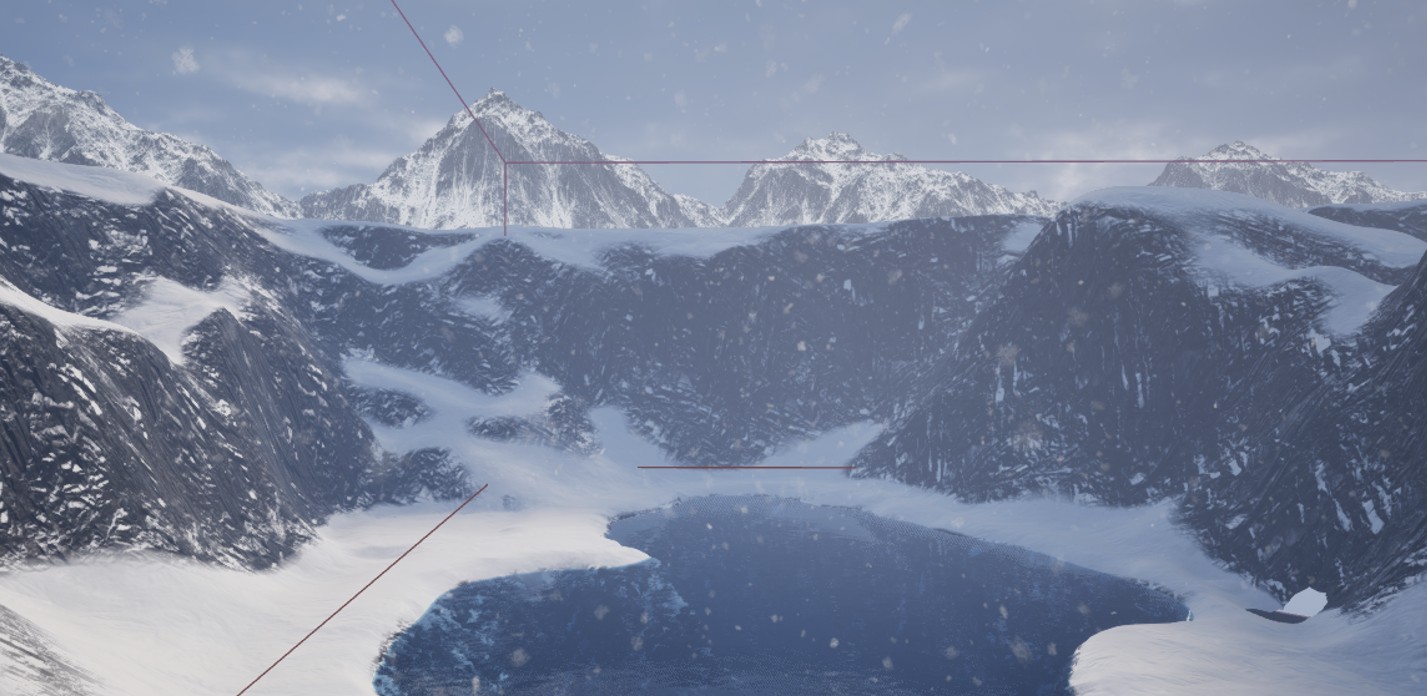
In the background, snow-dusted pine forests stretch toward distant mountains, reminding us that civilization in Zephara exists not despite the harsh wilderness, but in careful balance with it. People here have learned to thrive in a frozen world, and every building, every tool, every tradition reflects that hard-won knowledge.
The Balance of Warmth and Cold
We're going for a cozy yet adventurous feel—places that feel like home but are always just a stone's throw from your next grand adventure. The warm glow of the forge against the cold mountain backdrop perfectly captures this balance, and it's a dynamic we're weaving throughout every settlement in the game.
It's this contrast between safety and danger, warmth and cold, civilization and wilderness that defines the Zephara experience. When you return to a village after a harrowing dungeon crawl, we want that return to mean something. The tavern fire should feel warmer because you've been cold. The bed should feel softer because you've slept on stone. The familiar faces should feel friendlier because you've faced hostile ones.
"Every settlement in Zephara should feel like a breath of relief after a dangerous journey. A place where you can rest, craft, and prepare for what lies ahead—but never forget that adventure awaits just beyond the village walls. The forge's warmth is a reminder of everything you're protecting, and everything you have to lose."
A Philosophy of Functional Beauty
Our approach to settlement design follows what we call "functional beauty"—everything you see serves a purpose, but that purpose is expressed through aesthetic choices that tell stories. The blacksmith's setup isn't just a forge and anvil; it's a particular blacksmith's workspace, arranged the way they like it, worn in the spots they use most, cluttered in the corners they neglect.
This philosophy extends to every detail:
- Logical Placement: Water sources near cooking areas, storage near workspaces, paths worn where people actually walk
- Cultural Identity: Verdant settlements feel different from Frostborne villages—different materials, different priorities, different traditions
- Signs of Life: Food cooling on windowsills, laundry hanging to dry, children's toys left in corners, pets sleeping in sunny spots
- History in Wear: Old buildings show repairs; busy paths are muddy; popular spots are more worn; neglected areas gather dust
Dynamic Lighting
Our art team has been experimenting with different lighting scenarios to ensure each time of day feels unique and emotionally distinct. Dawn brings soft pink hues reflecting off the snow, painting the world in colors of hope and new beginnings. The midday sun creates stark shadows and brilliant snow glare, energizing and somewhat harsh. Dusk paints everything in deep oranges and purples, bringing a contemplative warmth.
And at night? The forge becomes a beacon of warmth and safety against the dark wilderness beyond. Lanterns glow in windows. Stars wheel overhead—more stars than you've ever seen, because the air is clean and light pollution doesn't exist. Aurora borealis dance across the sky during certain conditions, and those who pay attention might notice that the aurora's patterns aren't random.
Each lighting condition changes how a location feels. The same village that feels cozy and inviting at dusk might feel mysterious and slightly ominous on a foggy midnight. We're designing encounters and quests that take advantage of this—some events only happen at certain times, and sometimes the atmosphere itself becomes part of the challenge or reward.
Living Settlements
We believe that settlements should feel lived-in, not staged. You'll see NPCs going about their daily routines—routines that make sense, that respond to time and weather and events. The blacksmith works during the day and drinks at the tavern in the evening. Children play when the weather's good and huddle near fires when it's not. Guards change shifts. Merchants restock their displays. Dogs follow their owners around and bark at strangers.
Smoke rises from chimneys, and the amount varies with the season and time of day. The sounds of hammers on anvils echo through the streets, punctuated by shouted greetings and the laughter of children. When it rains, people seek shelter. When the aurora appears, they stop and look up. When danger threatens, they react.
These aren't just set dressing—they're part of what makes Zephara feel real. When you save a village from a threat, the people remember. When you help the blacksmith gather rare materials, the quality of their work improves. When you become a regular customer at a tavern, the barkeeper knows your usual order.
The world doesn't just exist around you; it responds to you, remembers you, and changes because of you.
What do you think of the direction we're heading? Let us know in the comments on Discord! We love hearing from our community, and your feedback directly influences the world we're building together.